Friday, January 8, 2016

Gertrude Dunn

Gertrude Dunn (b. reg. Croydon, Surrey, Oct-Dec 1884; d. 12 January 1949 in Tooting Bec, London)

Gertrude Willoughby Cecilia Meade was the third of four children of Joseph Willoughby Meade (1847-1933), the manager of a sugar refinery, and his second wife, Marion Gertrude Cohen (1855-1932), who were married at St. Dominic's Priory in St. Pancras, Middlesex, on 31 October 1874. (Some of the family seem at some point to have dropped the final e in their surname, as official records appear under both "Meade" and "Mead".)  Gertrude had two older brothers and one younger sister. Her oldest brother Gerald Dominic Willoughby Meade (1875-1958), published some booklets and a substantial book Chinese Ghouls and Goblins (1928) as by "G. Willoughby-Meade".

Gertrude married a banker's clerk, Edward William Gillow Dunn (1871-1951) in the spring of 1907.  They had two children, a daughter born in 1910 and a son born in 1912.

As Gertrude Dunn she published three fantasy novels (her only books) in a short span of three years, all with the same publisher, Thornton Butterworth. The first, Unholy Depths (published in October 1926), is a ghost story with spiritualistic overtones concerning a house built over the former camping ground of gyspies, whose queen practiced some kind of voodoo. The second, and probably the scarcest of the three, is The Mark of the Bat: A Tale of Vampires, Living and Dead (published in March 1928). It interestingly has a hereditary yet living vampire who find a rival in his victim, who has become a traditional vampire. And the third is And So Forever (published in October 1929), telling the story of a beautiful woman whose extraordinarily long life is apparently owed to witchcraft and to a mysterious elixir. All three Gertrude Dunn novels are uncommon.


This author is not to be confused with Gertrude Ballie-Weaver (1855-1926), who was born Gertrude Renton, and who was married to Henry Arthur Colmore Dunn for several years before his death in 1896. During these years she was known as Gertrude Colmore Dunn, and used "G. Colmore" or "Gertrude Colmore" as her pen-name. After she was married a second time to Harold Baillie-Weaver in 1901, she continued to use the same pen-name.

Friday, January 1, 2016

Sabine Büssing


Sabine Büssing (b. Dortmund, Germany 1960)

Sabine Büssing majored in Russian and English language and literature, taking her teacher’s degree in 1982.  She worked as a lecturer and researcher at Ruhr University, Bochum, from 1982 though 1987, receiving her M.A. in 1983 and Ph.D. in 1987.  Her doctoral thesis was published in English as Aliens in the Home: The Child in Horror Fiction (1987).  Other books have appeared in English and in German. These include, in English:  Of Captive Queen as and Holy Panthers: Prison Fiction and Male Homoerotic Experience (1990), A Darker Shade of Bale (1994), and The Ultimate Guide to Negative Thinking (1997).  And in German: Balladenzauber: Schulklassiker unverschämt originell interpretiert für Deutschlehrer und ihre Opfer (1995)  [Ballad-Magic: School Classics Outrageously Interpreted for German Teacher sand Their Victims];   Das Deutsche Reiseschauderbuch Satiren (1999) [The German Travel-Shudders Book of Satires]; Leuchtturm im Dschungel: Roman über das Leben des Schriftstellers Robert Louis Stevenson (1999) [Lighthouse in the Jungle: A Novel about the Life of Writer Robert Louis Stevenson]; Kinderreime rund ums Jahr: zum Vorlesen und Vortragen (1999) [Nursery Rhymes throughout the Year: For Reading and Writing]; and Die nackte Wahrheit hinterm Notenschlüsselloch: was Sie niemals über unsere grossen deutschen Komponisten erfahren wollten (2000) [The Naked Truth behind the Clef Hole: What You Never Wanted to Know about Our Great German Composers].

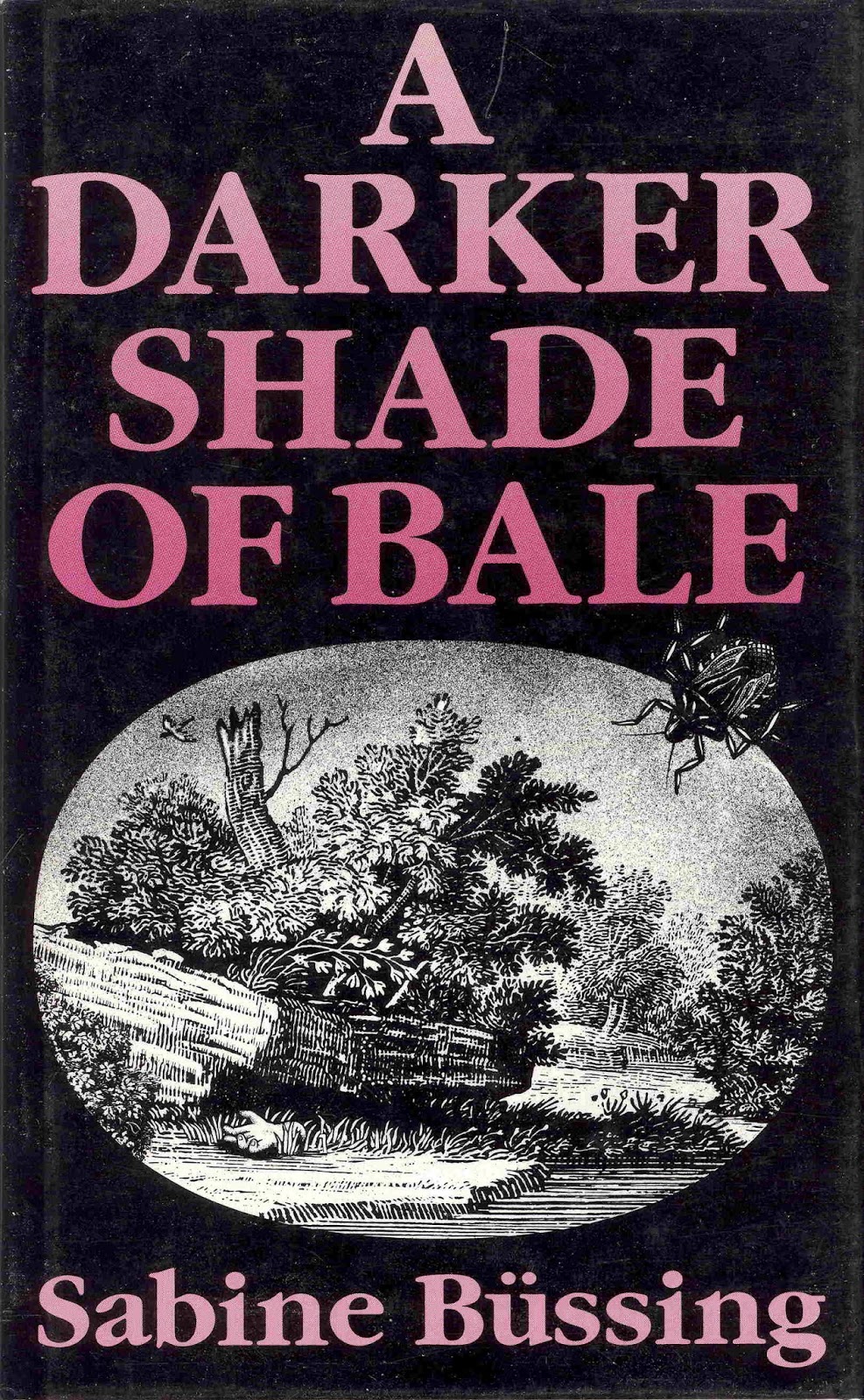
A Darker Shade of Bale, published by the The Book Guild of Sussex, is a collection of ten macabre stories. Some are historical, some modern. Some have plot twists that are not entirely successful.  Ramsey Campbell blurbed the volume accurately: “a feast of the grotesque, the psychological and the marvellous in the best European tradition.” 


Wednesday, December 30, 2015

Kenneth Gunnell

Kenneth Gunnell (b. Hove, Sussex, 17 February 1918; d. reg. Truro, Cornwall, May 2001)

Kenneth George P. Gunnell was the son and only child of George Thomas Gunnell (1887-1968).  In the literary world he is primarily remembered as the translator of Bernard Sellin's The Life and Works of David Lindsay (Cambridge University Press, 1981).  Gunnell had in fact known Lindsay in Hove during the last seven years of Lindsay's life, beginning in the summer of 1938, and his brief translator's preface adds some nice details of  Lindsay's final years.

Gunnell's only other known publications are of a very different sort: two novels that were both published by Luxor Press of London, though the first book had a successful American edition under the Phoenix Library imprint of Grove Press. The Graduate Mistress (1971) is a sexy tale of a schoolmistress dominating one of her young male students.  In the second, The School for Sin (1973), a young man relates his sexual adventures as a teacher at a boarding school for girls. These books are in style about as far away from David Lindsay as you can get. 


Sunday, December 29, 2013

Edwina C. Geach

Edwina C. Geach (b. Melbourne, Victoria, Australia, 1870; d. New South Wales, 25 December 1905)

Little is known of Edwina Catherine Geach, the daughter of Edwin Geach and his wife Catherine, nèe Greenwood.  Her slim posthumous collection, The Soul of the Ti-Tree (Melbourne: Thomas C. Lothian, 1909), is basically a memorial volume, comprising just over two dozen prose sketches and three poems. A small number of the writings were published pseudonymously during the author’s lifetime, but no details are given.

The volume contains a short introduction by the (anonymous) editor, plus a head-quote by Fiona Macleod (whose mystical tales were clearly a source of inspiration to the writer), and an odd unsigned “Foreword” which tells of a young wood-maiden, centuries ago, who was beloved by the fairies and pixies and sprites, but who “in the fulness of time” took her part as a daughter of the world, until the call of the trees for her to return became too strong for her to resist.  It ends:  “After her departure there were found certain writings, which she had made that about the world that is in the midst of the ti-tree, and about the world that is the world of men, and about the world that was in the centre of her own being.  These writings, coming from the heart of a woman, true and tender and compassionate, are now made into a book, so that they may be read by those who knew her and loved her, and by those who, loving the trees and the earth and the sea, would also have loved the maiden form the land of the ti-tree had their passed crossed hers.”  The allegory of the authoress seems to hint of suicide, as does the introductory note, which remarks of the “withdrawal” of her unique personality on Christmas morning of 1905. 

The tales are mostly very short, and one wishes that some of these gossamer mystical sketches had a bit more substance and depth to them, but they don’t.  One sketch was reprinted separately as a booklet, An Elfin Land (Melbourne: Sydney J. Endacott, [1914].


Thursday, December 26, 2013

Alexander Kinghorn


Alexander Kinghorn (b. London, 12 October 1926; d. Oakington, Cambridgeshire, 25 April 2007)


Alexander (“Sandy”) Manson Kinghorn was born in London to a Scottish family.  He studied at the University of Aberdeen, and received an M.A. in 1947 for his dissertation “A Study of Literary Criticism in Scotland during the Second Half of the Eighteenth Century”. He received a Ph.D. from Pembroke College, Cambridge, in 1953. His studies had been interrupted for three years service in post-war Vienna as part of the army intelligence corps. His scholarly publications were numerous (some signed “A.M. Kinghorn”), including The Chorus of History, 1485-1558: Literary-Historical Relations in Renaissance Britain (1971), and the booklet Death and the Makars: Timor Mortis in Scottish Poetry to 1600 (1979). He also edited texts such as John Barbour’s The Bruce: A Selection (1960), and anthology of Mediaeval Drama (1968; second edition, as The Rise of English Drama to 1600, 1984), The Middle Scots Poets (1970), and Shakespeare: The Merchant of Venice (1988). With his longtime friend Alexander Law he co-edited The Works of Allan Ramsey in six volumes (1951-1974), and The Poems of Allan Ramsey and Robert Fergusson (1974). Kinghorn also contributed to many journals. His pseudonymous work includes a biography, The Life and Death of Michael X (1981), as by James Sharp, and a short book of illustrated rhymes, Jittery Goose (1975), as by Tom Piper.


He married Marion Gurling in London on 1 September 1956.  His academic postings ranged around the world:  the University of Texas at Austin (1953-55), McGill University in Montreal (1955-57), King’s College, at Dalhousie University in Nova Scotia (1957-1960), and the University of the West Indies, Jamaica (beginning in 1960).  After some time in Denmark, Kinghorn spent the 1980s as Professor of English at the University of Qatar in the Arabian Gulf.  After his wife died in Qatar in the late 1980s, Kinghorn retired to England, and subsequently re-married, a widow Margaret Crow, in 1996.  


In retirement he turned to writing ghost stories, following the example of M.R. James. These stories were published as a trade paperback original, Thirteen Ghost Stories (Bognor Regis, West Sussex: Woodfield Publishing, 2004).  In his Preface, Kinghorn notes that James “drew attention to the suggestive importance of settings” in the writing of ghost stories, and Kinghorn has followed James’s example.  Indeed, it is the details of Kinghorn’s settings that give the stories real verisimilitude, along with (again following James) a tendency for malevolent ghosts.  These are literate, atmospheric tales, which have gone mostly unnoticed by readers of the genre. Kinghorn died of cancer.